
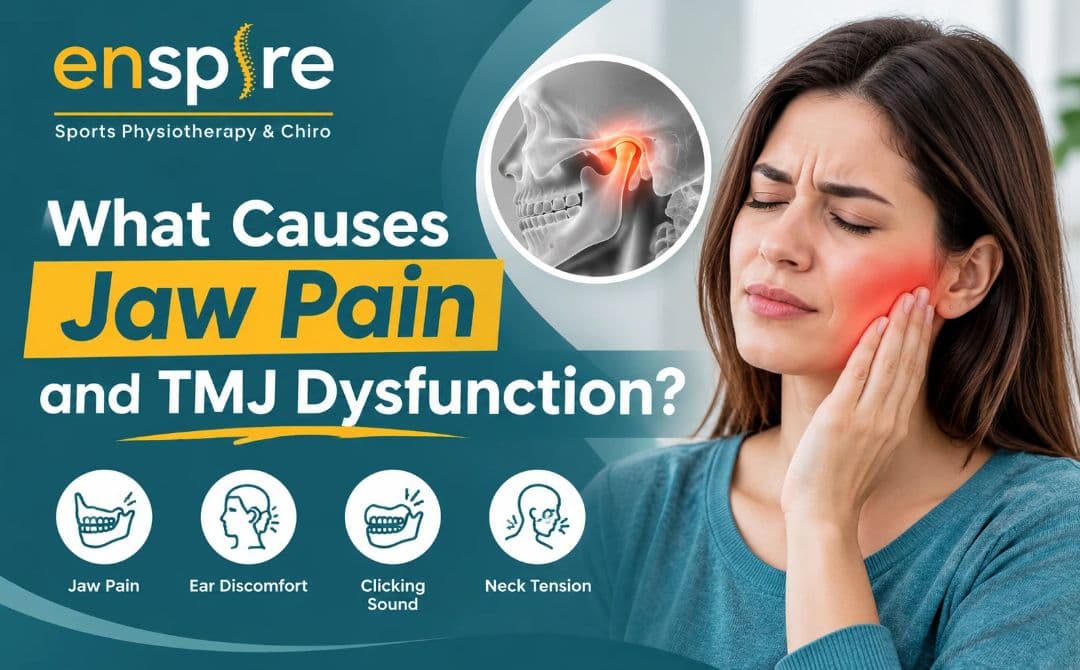
Jaw pain can make simple daily activities uncomfortable. Eating, talking, yawning, or even smiling may become difficult when the jaw feels sore, tight, or stiff. Some people also notice clicking sounds, headaches, or pain around the ears.
These problems are often linked to the temporomandibular joint, also known as the TMJ. This joint connects the lower jaw to the skull and helps the mouth open, close, and move from side to side.
TMJ dysfunction can happen for many reasons. There is not always one clear cause. In many cases, several different TMJ causes work together and create pain or stiffness.
Understanding the possible jaw pain causes can help you know when simple changes may help and when professional care may be useful.
Ready to Move Better and Feel Better?What Is TMJ Dysfunction?
The temporomandibular joint is located just in front of each ear.
It helps your jaw move while you speak, chew, swallow, and yawn. Muscles, ligaments, and a small disc inside the joint all work together to allow smooth movement.
TMJ dysfunction happens when the joint or the surrounding muscles do not move comfortably.
The symptoms can be mild for some people and much more uncomfortable for others.
Teeth Grinding and Jaw Clenching
One of the most common jaw pain causes is teeth grinding or jaw clenching.
Some people clench their teeth while working, driving, or feeling stressed. Others grind their teeth while sleeping without knowing it.
When this happens regularly, the muscles around the jaw may become tired and sore.
You may wake up with:
Teeth grinding can place extra pressure on the TMJ over time.
A dentist may also notice signs of tooth wear if grinding happens frequently.
Stress and Muscle Tension
Stress is another common factor linked to jaw discomfort.
When people feel stressed, they may tighten their jaw without realizing it. The neck and shoulder muscles may also become tense.
This constant muscle tension may make the jaw feel tired, sore, or stiff.
Stress does not always directly cause TMJ dysfunction, but it may make existing symptoms worse.
Relaxation, regular movement, and becoming more aware of clenching habits may help reduce unnecessary pressure around the jaw.
Poor Neck Position and Long Screen Hours
Your jaw does not work separately from the rest of your upper body.
The muscles around your neck, shoulders, and jaw are closely connected.
Spending many hours looking down at a phone or leaning toward a computer screen may increase tension in these areas.
This does not mean poor posture is always one of the main TMJ causes, but it may contribute to discomfort in some people.
Taking regular breaks, changing position, and adjusting your workstation may help reduce muscle tension around the neck and jaw.
Injury to the Jaw or Face
An injury can also lead to TMJ problems.
This may happen after:
The muscles, ligaments, or joint may become irritated even when there is no serious fracture.
Jaw pain after an injury should be assessed if the pain is severe, movement becomes limited, or the bite feels different.
Arthritis and Joint Changes
The TMJ is a joint, just like the knee, shoulder, or hip.
Because of this, it may also be affected by arthritis.
A healthcare professional can help determine whether a joint condition is contributing to your symptoms.
Problems With the Jaw Disc
Inside the TMJ, there is a small disc that helps the joint move smoothly.
Sometimes the disc can move slightly out of its normal position.
This may cause clicking or popping when opening or closing the mouth.
A clicking jaw does not always mean there is a serious problem. Some people have clicking without any pain.
However, clicking combined with pain, locking, or limited movement may need further assessment.
Chewing Habits Can Affect the Jaw
Certain everyday habits may place extra stress on the jaw.
These include:
These habits may not be the main cause of TMJ dysfunction, but they can increase muscle fatigue and make existing symptoms worse.
Reducing these habits may give the jaw more time to rest.
Dental Problems May Cause Jaw Pain
Not every case of jaw pain comes from the TMJ.
Dental problems can also cause similar discomfort.
For example, tooth infections, impacted teeth, or other dental issues may cause pain that spreads into the jaw.
This is why proper assessment is important.
A dentist may be the right professional when the pain appears to come from the teeth. A physiotherapist may help when muscle tension, movement, neck problems, or joint stiffness are involved.
How Physiotherapy Can Help With TMJ Dysfunction
Physiotherapy may help some people manage TMJ-related pain.
Treatment depends on what is contributing to the symptoms.
A physiotherapist may assess:
Treatment may include gentle exercises, manual therapy, massage therapy, and movement education.
Dry needling or IMS may also be used when appropriate for certain muscle-related problems.
Home exercises may be recommended to improve movement and muscle control.
The aim is not only to reduce discomfort. Treatment may also help improve how the jaw, neck, and surrounding muscles work together.
When Should You Get Jaw Pain Checked?
Mild jaw discomfort may improve with rest and simple changes.
However, you should consider professional care if the pain keeps returning or starts affecting daily activities.
Seek assessment if:
Sudden or severe symptoms should not be ignored.
Conclusion
There are many possible TMJ causes, including teeth grinding, jaw clenching, muscle tension, injury, arthritis, joint changes, and certain daily habits. Understanding these jaw pain causes can make it easier to choose the right care.
When jaw pain is linked to muscle tightness, poor movement, or neck problems, physiotherapy may help. At Enspire physiotherapy, services such as physiotherapy, massage therapy, manual therapy, dry needling, and personalized exercises may be used to support better movement, reduce discomfort, and improve everyday function.
Frequently Asked Questions
Common TMJ causes include teeth grinding, jaw clenching, stress, muscle tension, arthritis, jaw injuries, joint problems, and certain chewing habits that strain the jaw.
Yes, stress can cause people to clench their jaw or tighten facial muscles without noticing, which may lead to soreness, stiffness, headaches, and discomfort.
Jaw clicking or popping may happen when the small disc inside the TMJ moves during jaw motion. It needs assessment if pain or locking occurs.
Physiotherapy may help improve jaw and neck movement, reduce muscle tension, and improve strength through exercises, manual therapy, massage, and movement education.
Seek professional care if jaw pain keeps returning, becomes severe, affects eating, causes locking, follows an injury, or occurs with swelling or fever.